
Comfytravel

May 2026

Supported NDIS Holidays in Sydney with Accommodation and Care

Blog

Travel has the power to inspire confidence, encourage independence, and create meaningful experiences. For people living with disability, having the right support in place can make all the difference when planning a holiday. Sydney, with its stunning harbour, accessible attractions, beautiful beaches, and vibrant city atmosphere, offers an ideal destination for participants looking to enjoy a safe and enjoyable getaway. Whether you are seeking a short break, a family holiday, or an opportunity to explore new experiences, supported travel allows participants to enjoy greater freedom while receiving the assistance they need throughout their journey. Why Sydney Is a Great Destination for NDIS Participants? Sydney is one of Australia’s most accessible and exciting cities. It offers a unique combination of relaxation, sightseeing, social opportunities, and community engagement. Participants can enjoy iconic landmarks, waterfront experiences, accessible parks, cultural attractions, and scenic coastal destinations while travelling with confidence. Many travellers choose Sydney because it provides: With proper planning and support, participants can experience everything Sydney has to offer while maintaining their daily routines and individual preferences. The Benefits of Supported Travel Supported holidays are designed to help participants enjoy travel while receiving assistance that matches their personal needs. This support can range from occasional guidance to more comprehensive care throughout the holiday. Benefits of supported travel include: Increased Independence Travelling encourages participants to develop confidence, make decisions, and explore new environments while having support available when required. Social Engagement Supported holidays provide opportunities to connect with others, participate in community activities, and enjoy shared experiences that promote wellbeing and inclusion. Personal Growth Experiencing new places and activities can help build life skills, confidence, and greater independence in everyday situations. Reduced Stress for Families Families and carers can feel reassured knowing participants have access to professional support while enjoying a safe and organised holiday experience. Accommodation That Supports Comfort and Accessibility Finding suitable accommodation is one of the most important aspects of planning a successful holiday. Accessibility, comfort, and convenience all contribute to a positive travel experience. When choosing accommodation, factors often include: Many participants searching for Supported NDIS Holidays in Sydney with Accommodation want assurance that their accommodation will meet both practical and personal needs. Selecting the right environment helps create a holiday experience that feels comfortable, welcoming, and enjoyable. Popular Activities for NDIS Travellers in Sydney Sydney offers a wide variety of experiences suitable for different interests and support requirements. Harbour Experiences Sydney Harbour remains one of the city’s most popular attractions. Participants can enjoy scenic views, waterfront walks, and relaxing sightseeing opportunities. Coastal Adventures Accessible beaches and coastal locations provide opportunities for relaxation, fresh air, and enjoying Sydney’s natural beauty. Parks and Gardens Sydney’s parks and gardens offer peaceful settings where participants can enjoy nature, social outings, and recreational activities. Community and Cultural Experiences Museums, markets, community events, and local attractions allow travellers to engage with Sydney’s vibrant culture while building confidence and independence. Personalised Support Throughout the Journey Every participant has unique goals, interests, and support requirements. Personalised travel planning helps ensure each holiday reflects individual preferences while providing the right level of assistance. Support may include: This tailored approach helps participants enjoy their holiday while maintaining comfort, safety, and independence. Choosing the Right Supported Holiday When planning a supported holiday, it is important to consider: A well-planned holiday can provide a balance of adventure, relaxation, personal growth, and meaningful experiences. Many travellers looking for Supported NDIS Holidays in Sydney with Accommodation value flexibility and personalised planning that allows them to enjoy a holiday designed specifically around their needs. Conclusion Comfy Travel specialises in creating personalised supported holiday experiences for NDIS participants across Australia. From accessible accommodation and tailored travel planning to participant-focused support and enjoyable holiday experiences, Comfy Travel helps make every journey comfortable, safe, and rewarding. Whether you are planning a short getaway, a family holiday, or a supported travel experience in Sydney, Comfy Travel is committed to helping participants travel with confidence, independence, and peace of mind.

comfy travel

NDIS Short-Term Accommodation (STA) vs Supported Holidays: What’s the Difference and Which One Is Right for You?

Blog

For many NDIS participants and families, choosing between Short-Term Accommodation (STA) and supported holidays can feel confusing. Both offer a chance to step away from daily routines, experience new environments, and receive the support needed for a safe and enjoyable stay. However, they are designed for different purposes and can offer very different experiences. If you’re planning a break, respite stay, or supported travel experience under the NDIS, understanding the difference between STA and supported holidays can help you choose the option that best matches your goals, funding, and support needs. Understanding NDIS Short-Term Accommodation (STA) Short-Term Accommodation (STA), sometimes called respite, is an NDIS-funded support that provides temporary care away from your usual home environment. It is generally designed to support both participants and their carers by offering a short break while ensuring ongoing care and assistance. STA may include: The purpose of STA is not necessarily a holiday in the traditional sense. It is primarily focused on support, respite, and building daily living skills. Who STA Is Best For STA can be suitable for participants who: What Are Supported Holidays? Supported holidays are planned travel experiences designed specifically for people living with disability who want to enjoy a vacation while receiving assistance tailored to their needs. Unlike STA, supported holidays are often centred around leisure, travel, exploration, and enjoyment. These holidays may include: Supported holidays allow participants to enjoy travel opportunities they may not otherwise access independently. Key Differences Between STA and Supported Holidays Purpose STA is generally intended for respite and support-based stays. Supported holidays focus on recreation, enjoyment, and travel experiences. Environment STA often takes place in dedicated accommodation settings such as respite homes or support residences. Supported holidays may include resorts, accessible holiday homes, hotels, or tourism destinations. Experience STA may involve routine-based support and structured activities, while supported holidays are often customised around leisure interests like beach trips, city visits, dining, and excursions. Funding Context STA is usually funded under NDIS Core Supports when aligned with participant goals and approved plan funding. Supported holidays may involve a combination of participant funding, self-funded travel expenses, and support-related funding depending on circumstances. Why More Participants Are Choosing Supported Holidays Many Australians are increasingly interested in supported travel because it offers more than just a temporary stay — it creates memorable experiences, confidence, and social opportunities. Greater Independence Supported holidays encourage participants to: Social Connection Travel experiences often help participants build friendships and engage with group activities. Family Relief Families and carers can feel reassured knowing their loved one is enjoying a safe, supervised holiday with professional support. When STA May Be the Better Option STA may be the right choice if your goals include: Building Daily Living Skills Participants can learn skills such as: Respite for Carers STA can provide valuable temporary relief for families and caregivers. Structured Support Needs Participants who require a highly predictable routine may benefit more from STA than holiday-style travel. When Supported Holidays May Be the Better Choice Supported holidays may suit participants who want: A Genuine Travel Experience This can include: Confidence Building Travel often helps participants increase self-confidence and independence. Social and Recreational Goals If your NDIS goals include community participation or social inclusion, supported holidays may align well. Things to Consider Before Choosing Before deciding, consider: Your NDIS Goals Ask whether your plan goals focus on: Your Support Needs Think about: Funding Availability Check your current plan funding and discuss with your support coordinator to understand which option may align best. Benefits of Supported Travel for NDIS Participants Supported holidays can provide long-term personal benefits such as: Improved Confidence Trying new experiences can increase self-belief. Greater Social Participation Participants may form new friendships and strengthen communication skills. Mental Wellbeing A change of scenery and enjoyable activities can improve emotional wellbeing. New Life Experiences Travel offers opportunities that enhance quality of life beyond daily routines. How to Choose the Right Provider The right provider should offer: Experienced Disability Support Staff Choose a provider experienced in accessible travel and participant-centred care. Flexible Holiday Options Look for: Transparent Communication A quality provider should clearly explain what is included, support arrangements, and how the trip is managed. Why Supported Holidays Are Growing in Australia More participants are choosing supported travel because disability services are shifting toward lifestyle-focused support. Participants increasingly want: Supported holidays align strongly with modern NDIS goals around inclusion and personal growth. Conclusion: Finding the Right Travel Experience Choosing between NDIS STA and supported holidays depends on your personal goals, support needs, and the kind of experience you want. STA is ideal for respite and structured support, while supported holidays are better for participants seeking enjoyable travel experiences, social connection, and greater independence. If you’re looking for professionally planned accessible holidays designed for NDIS participants, Comfy Travel offers tailored supported holiday experiences across Australia. Their team focuses on safe, enjoyable, and participant-centred travel, helping individuals create memorable experiences while receiving the right level of support. Whether you want a short getaway, confidence-building travel, or a fully supported holiday, they can help you explore the right option for your next journey.

accessible accomodation

Top Accessible Holiday Accommodation in Australia for Wheelchair & Disability Support Needs

Blog

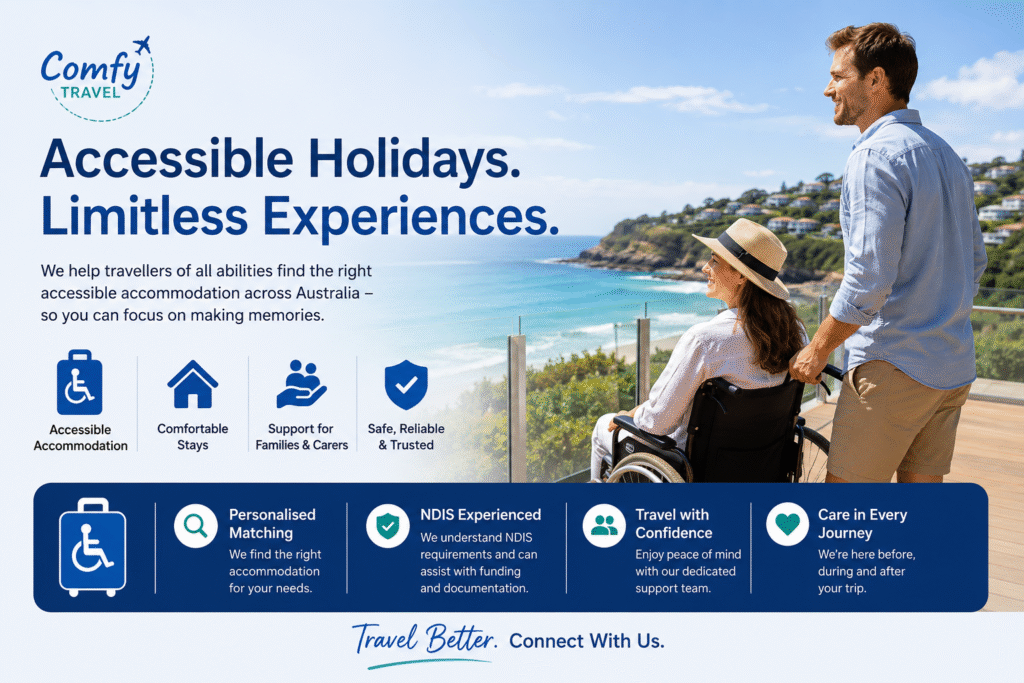
Travelling should be exciting, relaxing, and empowering for everyone. Yet for many Australians living with mobility challenges, sensory needs, or disability support requirements, planning a holiday can quickly become stressful. Questions about wheelchair access, bathroom safety, support worker accommodation, transport access, and comfort often turn what should be a joyful experience into an overwhelming task. Fortunately, accessible travel in Australia is improving rapidly. Across the country, hotels, resorts, apartments, cabins, and holiday homes are becoming more inclusive, offering practical accessibility features alongside comfort and style. From coastal escapes in Queensland to peaceful regional retreats in Victoria and luxury city stays in Sydney, accessible accommodation options are now more diverse than ever. This guide explores the best accessible holiday accommodation options in Australia, what features to look for, and how travellers with disability support needs can plan safe, enjoyable, and stress-free holidays. What Is Accessible Holiday Accommodation? Accessible accommodation refers to hotels, resorts, apartments, holiday homes, and other stays designed or modified to support people living with disabilities, mobility limitations, or sensory needs. True accessibility goes beyond basic wheelchair access. A genuinely inclusive accommodation experience should provide comfort, independence, dignity, and safety for all guests. Common accessibility features include: Every traveller’s needs are unique, which is why personalised planning is essential when booking disability-friendly accommodation. Why Accessible Travel Matters Travel is more than a holiday. It creates opportunities for connection, independence, mental wellbeing, social inclusion, and confidence-building. For individuals living with disabilities, accessible travel can: Families and carers also benefit significantly when accommodation is properly designed for accessibility. Reduced stress and improved safety allow everyone to enjoy the experience together. Best Types of Accessible Accommodation in Australia Australia offers a growing range of accessible accommodation choices suitable for different travel goals, budgets, and support requirements. 1. Accessible Beach Resorts Queensland, New South Wales, and Western Australia feature many coastal resorts with wheelchair-friendly facilities and beach access equipment. Popular accessibility features include: Beach holidays remain one of the most requested travel experiences for NDIS participants and families because they combine relaxation with therapeutic outdoor experiences. 2. Fully Accessible Holiday Homes Holiday homes provide privacy and flexibility for travellers requiring additional support equipment or travelling with family and carers. Many accessible holiday homes include: These properties are ideal for longer stays or group travel. 3. Wheelchair-Friendly City Hotels Major Australian cities now offer increasingly sophisticated accessible hotel options close to attractions, hospitals, restaurants, and public transport. Cities with strong accessible tourism infrastructure include: Accessible city hotels often include: 4. Nature and Regional Escapes Accessible tourism is expanding into regional Australia, allowing travellers to experience national parks, wineries, countryside retreats, and eco-tourism destinations. Modern accessible cabins and lodges may feature: These experiences are particularly valuable for travellers seeking low-stimulation environments and mental wellbeing benefits. Key Features to Look for When Booking Accessible Accommodation Not all properties advertised as “accessible” meet practical disability support requirements. Before booking, travellers should confirm detailed accessibility information directly. Important questions include: Bathroom Accessibility Bedroom Accessibility Entry and Navigation Kitchen and Dining Access Support Worker Accommodation Sensory and Cognitive Accessibility Requesting photos, floor plans, and accessibility measurements can help avoid unexpected issues during travel. Accessible Accommodation and the NDIS Many Australians use NDIS funding to support travel-related goals connected to community participation, independence, respite, or social engagement. Depending on individual plans and goals, funding may assist with: NDIS travellers often require documentation such as quotes, invoices, and support justifications. Working with travel providers experienced in disability support planning can simplify this process significantly. Common Challenges Travellers Face Despite improvements in accessible tourism, travellers with disabilities still encounter challenges such as: This is why personalised travel planning and accessibility verification remain essential. Tips for Planning a Successful Accessible Holiday Book Early Accessible rooms are limited and often booked well in advance, especially during school holidays and peak seasons. Be Specific About Your Needs Provide detailed information about mobility equipment, support needs, transfers, sensory considerations, and medical requirements. Confirm Accessibility Directly Never rely solely on website descriptions. Speak directly with accommodation providers or travel specialists. Consider Travel Insurance Ensure insurance policies adequately cover medical equipment, cancellations, and support requirements. Plan Transport Carefully Check accessible airport transfers, public transport options, parking access, and local mobility services. The Future of Accessible Tourism in Australia Australia’s tourism industry is gradually recognising the importance of inclusive travel experiences. Demand for accessible accommodation is growing rapidly, driven by: Forward-thinking accommodation providers are investing heavily in inclusive design, making travel more accessible for everyone. The future of Australian tourism will increasingly focus on dignity, independence, flexibility, and personalised experiences for travellers of all abilities. Conclusion Accessible holidays should be enjoyable, comfortable, and accessible for everyone. With thoughtful planning, the right support, and accommodation tailored to individual needs, travellers living with disabilities can confidently experience Australia’s stunning beaches, vibrant cities, peaceful regional escapes, and iconic destinations. Finding truly accessible accommodation often requires careful research and an understanding of mobility, sensory, and support requirements. Comfy Travel helps simplify this process by connecting travellers, families, carers, and NDIS participants with suitable accommodation and personalised travel support, creating safe, inclusive, and stress-free holiday experiences across Australia.

Call
Scroll to Top