

Comfytravel

October 2026

Supported Travel for Medical Appointments in New South Wales

Supported Travel for Medical Appointments in New South Wales

Blog

Accessible Transport and Disability Support Accessing healthcare should not be complicated by transport difficulties, inaccessible accommodation or the need for additional disability support. For people with disability, travelling to a medical appointment in New South Wales (NSW) may require more than simply booking a vehicle. It can involve coordinating accessible transport, arranging overnight accommodation, organising mobility equipment and ensuring the right support is available throughout the journey. Comfy Travel helps people with disability plan supported travel for medical appointments, specialist consultations, treatment procedures and hospital visits. Whether you are travelling to Sydney for specialist care, attending appointments in regional NSW or travelling from interstate, the right arrangements can help make your medical journey more comfortable, organised and manageable. What Is Supported Medical Travel in New South Wales? Supported medical travel involves coordinating travel arrangements around the accessibility, mobility and disability-related support needs of an individual attending healthcare appointments. For some people, this may mean arranging suitable transport to a local medical centre. Others may need assistance planning a longer journey involving hospital visits, overnight accommodation, support workers or essential equipment. Comfy Travel focuses on helping coordinate the practical details of these journeys, based on individual requirements and service availability. Supported medical travel may include: With appropriate preparation, people with disability and their families can make more informed decisions about their travel arrangements and focus on the purpose of their medical visit. Accessible Transport for Medical Appointments in NSW Finding suitable transport is one of the most important parts of planning a medical journey. Standard transport options may not meet the requirements of people who use wheelchairs, mobility aids or other assistive equipment. Transport for NSW provides information about accessible public transport, wheelchair-accessible taxis and community transport options across the state. However, the suitability of each option depends on the person’s requirements, route and availability. Comfy Travel can discuss your transport requirements and help coordinate suitable arrangements where available. Wheelchair-Accessible Transport and Mobility Support People who use wheelchairs or other mobility aids may need vehicles with suitable access, securement systems and enough space for their equipment. When organising medical transport in NSW, consider: Confirm these requirements with the transport provider before booking to ensure the vehicle is suitable for your needs. Door-to-Door Medical Appointment Transport Travelling between home, a hospital, a specialist clinic and accommodation can become difficult when several locations are involved. Coordinating these journeys in advance may reduce the stress of managing multiple transport arrangements. Comfy Travel can discuss pickup locations, appointment schedules and return journeys to help organise a practical travel plan. If your treatment involves sedation, surgery or another procedure that affects your ability to travel independently, follow your healthcare provider’s instructions regarding transport and discharge arrangements. Accessible Accommodation Near Hospitals in New South Wales Some medical appointments require an overnight stay, while specialist treatment or surgery may involve several days away from home. Finding accommodation that meets your accessibility requirements can make a significant difference to comfort and convenience. Comfy Travel can help explore suitable accommodation options according to your individual needs, preferred location, budget and availability. Features to Consider When Booking Accessible Accommodation Before confirming a booking, check whether the accommodation provides: If you need specialised equipment, such as a hospital bed, hoist or commode, discuss the requirements before your trip. Availability, delivery and installation should be confirmed directly with the relevant equipment and accommodation providers. Planning accommodation near your medical facility may also help reduce travel time when you have early appointments, multiple consultations or treatment scheduled across several days. NDIS Medical Travel Support in New South Wales NDIS participants may need to consider disability-related transport, support worker assistance and accommodation arrangements when planning medical travel. However, NDIS funding does not automatically cover all medical transport, treatment-related travel or accommodation expenses. Whether a particular cost can be funded depends on the nature of the support, the participant’s plan, applicable NDIS rules and the responsibilities of other service systems, including the health system. Comfy Travel can discuss your travel requirements and help you identify the costs and documentation that may need to be considered before making a booking. Understanding NDIS Funding for Medical Travel Before arranging your journey, it is helpful to clarify: If you are unsure whether a specific expense is covered, seek clarification from your plan manager, support coordinator or the NDIA before committing to the cost. Travel Assistance for Regional and Remote NSW Patients People living in regional or remote areas may need to travel significant distances to access specialist treatment that is unavailable locally. The NSW Government’s Isolated Patients Travel and Accommodation Assistance Scheme (IPTAAS) provides financial assistance for eligible patients who need to travel for certain specialist medical treatments. Eligibility requirements apply, including distance and treatment criteria. Checking potential assistance before travelling may help eligible patients understand whether they can receive support towards qualifying travel and accommodation costs. Medical Travel Support for Specialist Appointments, Surgery and Treatment Medical journeys vary depending on the type of appointment, the distance travelled and the support required. Planning should reflect the individual circumstances of each person. Specialist Medical Appointments Travelling to a specialist in Sydney or another NSW location may involve coordinating transport around a fixed appointment time. Preparing the itinerary in advance can help ensure that accessibility requirements, pickup arrangements and return travel are considered. Hospital Visits and Surgical Procedures Surgery and hospital procedures may require overnight accommodation, an accompanying support person or transport that follows specific medical instructions. Discuss post-procedure travel requirements with your healthcare team before booking. Some procedures require a responsible adult to accompany the patient, and independent travel may not be appropriate. Therapy and Rehabilitation Appointments People attending recurring therapy, rehabilitation or other healthcare appointments may benefit from having their travel requirements considered together. Coordinating dates, pickup times and accessibility needs can make repeated journeys easier to manage. Multiple Appointments Across NSW When medical care involves several specialists, diagnostic tests or treatment sessions, travel arrangements can become more complicated. A coordinated itinerary can help reduce unnecessary transfers and
wheelchair accessible

Best Wheelchair Accessible Vehicle Hire on the Gold Coast for NDIS Participants

Blog

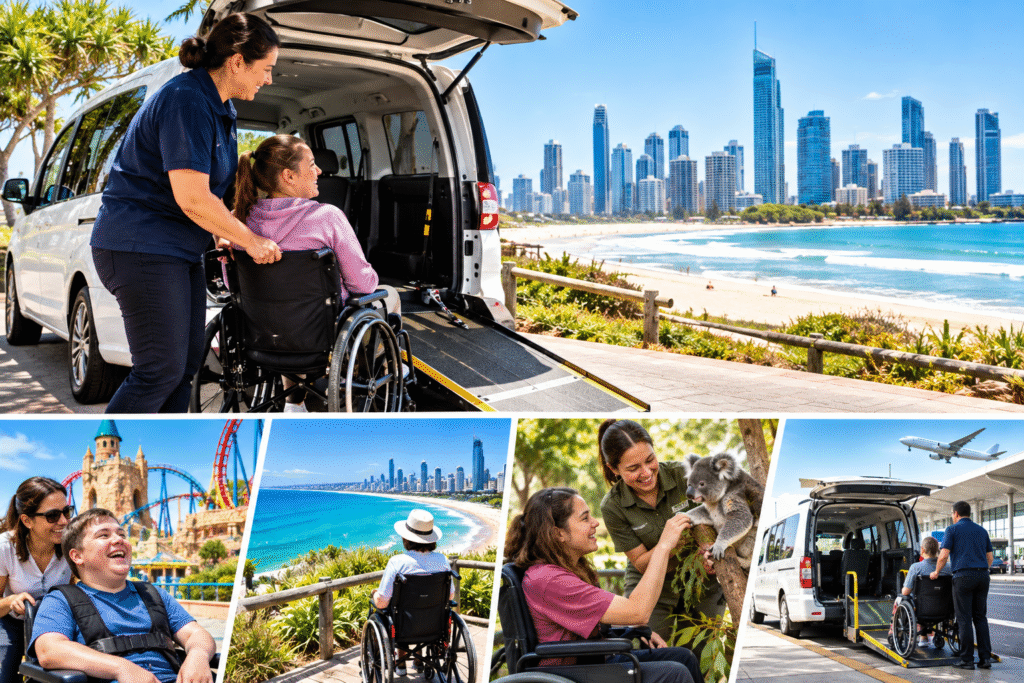
The Gold Coast draws more visitors with accessibility needs than almost anywhere else in Australia, thanks to its theme parks, beaches and warm year round weather. But getting around once you arrive depends on one thing: a wheelchair accessible vehicle that actually fits your needs. Let’s understand what wheelchair accessible vehicle hire is, whether NDIS funding covers it, what it costs on the Gold Coast, and how to book the right vehicle for your trip, whether that is a day at the theme parks, a family holiday or ongoing transport during a respite stay. What Is Wheelchair Accessible Vehicle Hire? Wheelchair accessible vehicle hire, often shortened to WAV hire, means renting a vehicle built or modified to carry a person in their wheelchair safely, rather than transferring them into a standard car seat. Most accessible vehicles on the Gold Coast fall into two categories: Both options usually include a ramp or hoist, tie-down restraints rated for wheelchair transport, and enough internal height and width for a power or manual wheelchair to travel safely. Does the NDIS Fund Wheelchair Accessible Vehicle Hire? This is the question most participants and families ask first, and the honest answer is that it depends on how the vehicle is used. The NDIS does not fund the cost of a vehicle itself, hired or owned, because transport is considered an everyday living cost every Australian has, disability or not. What the NDIS does fund is the support around getting you from one place to another. Core Support Transport Funding Most participants have a Transport budget in Core Supports, paid as one of three annual levels based on how much you work or study: This funding pays a transport provider to drive you, which in practice is how most participants access a wheelchair accessible vehicle on the Gold Coast: not by renting the van directly, but by booking a registered transport or chauffeur driven WAV provider who bills against this budget. It cannot be used for fuel, tolls, parking or trips with family or friends in an informal capacity. Support Worker Driven Transport If a support worker drives you as part of a funded activity, such as a Gold Coast day trip or a theme park visit, their time and travel can be paid from your Core Supports funding for community participation. This is separate to the Transport budget above and is often the simplest way to access accessible transport during a supported outing. What Is Not Funded Self drive accessible vehicle hire for a personal holiday, where no support need is being met beyond the drive itself, generally is not funded, since the NDIS treats this the same as any other travel expense. If you are unsure which category your trip falls into, check with your plan manager or support coordinator before booking. Types of Wheelchair Accessible Vehicles Available on the Gold Coast Gold Coast hire providers typically offer a small number of vehicle layouts, each suited to different needs: Vehicle type Best for Rear entry van with ramp Manual or power wheelchairs, solo or small group travel, easiest for self drive Side entry van with ramp Wheelchair users who prefer to travel in the front passenger position Hoist equipped van Heavier power wheelchairs or participants who cannot use a ramp safely Accessible people mover Families or groups travelling together with one or two wheelchair users How Much Does Wheelchair Accessible Vehicle Hire Cost on the Gold Coast? Pricing varies by vehicle type, hire length and whether a driver is included. As a general guide: Always request an itemised quote before booking, and confirm in writing whether the provider is NDIS registered if your plan is NDIA managed. How to Book an Accessible Vehicle for Your Gold Coast Trip Best Gold Coast Attractions to Visit with an Accessible Vehicle An accessible vehicle opens up the Gold Coast well beyond the beach. Popular accessible destinations include: How to Choose the Right Wheelchair Accessible Vehicle Hire Provider Ask these questions before you commit to a Gold Coast provider: FAQs: Wheelchair Accessible Vehicle Hire on the Gold Coast Does the NDIS Pay for Wheelchair Accessible Vehicle Hire? Not directly for the vehicle itself. The NDIS funds the transport or support worker time around using one, through your Transport or Core Supports budget, rather than the hire cost of a personal holiday vehicle. How Much Does a Wheelchair Accessible Van Cost to Hire on the Gold Coast? Costs vary by vehicle type, hire length and whether a driver is included. Self drive vans typically cost more per day than a standard rental, and chauffeur driven options are usually priced per trip or hour. Can I Hire a Wheelchair Accessible Vehicle Without an NDIS Plan? Yes. Accessible vehicle hire is available to anyone, NDIS funded or not. NDIS registration only matters if you want to claim the cost against your plan. Do I Need a Special License to Drive a Wheelchair Accessible Van? In most cases no, a standard driver license is enough for a self drive WAV, but always confirm with the hire provider, since some larger vehicles have different requirements. What Size Wheelchair Fits in a Hire Van? Most Gold Coast providers can accommodate standard manual and power wheelchairs. Always share your wheelchair’s exact dimensions and weight when booking to confirm fit. Can a Support Worker Drive Me in a Hired Accessible Vehicle? Yes, and this is one of the most common ways participants access accessible transport, with the support worker’s time funded through Core Supports. Book Accessible Gold Coast Travel With Comfy Travel Finding the right wheelchair accessible vehicle is only one part of planning a comfortable Gold Coast trip. Comfy Travel arranges supported holidays, respite stays and wheelchair accessible transport for NDIS participants across the Gold Coast and Australia wide, so you do not have to coordinate vehicles, accommodation and support separately. We will help you understand what your plan covers, match you with the right accessible vehicle and driver, and handle the booking details from

NDIS Short Term Accommodation in Sydney:

NDIS Short Term Accommodation in Sydney: Costs, Eligibility and How to Book

Blog

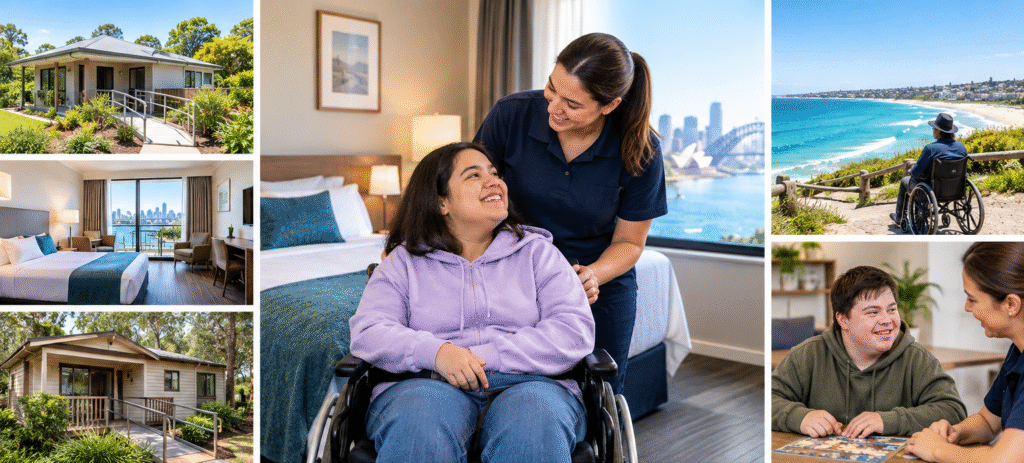
Sydney is home to more NDIS participants than any other city in Australia, and Short Term Accommodation (STA) is one of the most requested supports on a Sydney NDIS plan. It gives participants a break in a new setting and gives the family, friends or carers who usually provide support a proper rest. The rules changed again on 1 July 2026: STA pricing was unbundled, food was dropped from funding, and the support briefly renamed “Short Term Respite” has gone back to being called STA. This guide explains what STA covers in Sydney, who is eligible, what it costs under the new pricing, and exactly how to book a stay. What is NDIS Short Term Accommodation (STA)? Short Term Accommodation is NDIS funding for a supported stay away from your usual care arrangements. It gives the people who normally support you, family, friends or a carer, a short break, so they can keep caring for you once it ends. Most people simply call it NDIS respite. During an STA stay you keep receiving the disability support you normally need: help with personal care, daily routines and overnight support if you require it. The funding follows your support needs, not a fixed package, so a Sydney STA stay looks different for every participant. STA can take place in a dedicated respite house, a hotel, motel, cabin or short stay rental, your own home with a support worker staying overnight, or a homestay arrangement. If your plan says “Short Term Respite” instead of STA, it is the same support under its 2025 name. STA Settings and Areas Available in Sydney Greater Sydney gives participants more choice of STA setting than almost anywhere else in Australia, from harbourside accommodation to quiet suburban respite houses. Common options include: Most Sydney providers offer stays across the metro area, so you can choose somewhere close to family for easy visits, or further out for a genuine change of pace. Who Is Eligible for STA in Sydney? Eligibility for STA is set nationally by the NDIA, not by state, so the same rules apply whether you live in Sydney, regional NSW or elsewhere. You may be able to get STA funding if both of these apply: The NDIA bases the amount of STA funding on your usual level of support need, and considers whether other options, such as a support worker in your home or community services, would meet the need instead. Can Sydney Participants Under 18 Get STA? Yes, in some situations. The NDIA may fund STA for participants under 18 when their disability related support needs go beyond what’s typical for their age, and when a break will help the family keep caring for them. STA doesn’t replace normal parenting, such as settling a child to sleep or school holiday babysitting. How to Get STA Added to a Sydney NDIS Plan Talk to your my NDIS contact or Sydney based support coordinator. Explain how many hours of daily support your carer provides and why a break matters for keeping the care arrangement sustainable. If your plan doesn’t already include STA, or your situation has changed, you can request a plan change. What Does STA Cover, and What Doesn’t It Cover? STA pays for your disability supports and a standard place to stay. It doesn’t pay for the extras that turn a stay into a holiday. STA can fund STA can’t fund Support with everyday activities like showering, toileting and cooking Cruises, holiday packages, holiday accommodation and airfares Standard accommodation: hotel, motel, short stay rental, cabin or respite house Food and meals A support worker staying in your own home, or a homestay, if you usually need overnight support Theme parks, concerts, theatre, cinema, sport and conferences Overnight support, sleepover or active, based on your needs Passports, visas, travel or vehicle insurance   Travel or accommodation costs for family or support workers joining you on holiday Food is now your responsibility. Since 1 July 2026, the STA guideline says participants provide their own food during a stay, so budget for meals before you book. STA also does not replace ordinary time apart, such as school, work or community activities. How Much Does STA Cost in Sydney? From 1 July 2026, the NDIS replaced the old flat daily STA rate with separate priced components: The old flat rate assumed everyone needed active overnight support. Pricing now follows your actual needs, so a Sydney stay with a sleepover shift costs less than one with active overnight support. Current price limits are published in the NDIS Pricing Schedule, and Sydney providers generally sit within those national caps. Sydney accommodation itself, particularly near the harbour, Eastern Suburbs or CBD, can command a higher nightly rate than regional NSW, so always ask your provider for an itemised quote before booking. How STA Is Paid in Sydney How Many Days of STA Can You Get? Most Sydney participants are funded for up to 28 days of STA a year. The exact amount depends on your plan and your support needs. STA is usually funded for up to 28 days per year, and the guideline allows more only in exceptional circumstances. You can use those days flexibly: Pace your days so the funding lasts the whole plan. You should generally use STA within NSW, your home state. Stays interstate may be funded only if you live in a remote area. How to Book STA in Sydney: Step by Step Tip for Sydney support coordinators: book popular coastal and CBD settings early. Weekend and school holiday availability fills quickly across Greater Sydney. How to Choose an STA Provider in Sydney The right provider makes respite feel safe for you and genuinely restful for your carers. Ask these questions before you book: FAQs: NDIS STA in Sydney Is STA the Same as NDIS Respite? Yes. STA is the support most people mean when they say “NDIS respite.” It was briefly renamed Short Term Respite, then changed back to Short Term Accommodation in 2026. How

Call
Scroll to Top